Online Job Fair: How Employers Run Virtual Hiring Events
While traditional hiring relied on handshakes and business cards, today's talent acquisition pioneers are rewriting the rules of engagement in a world where the most powerful connections often begin with a cursor click rather than eye contact.
Published: Updated:
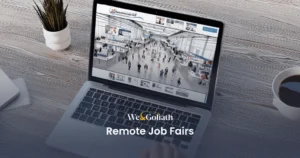
An online job fair is a virtual hiring event where employers and job seekers meet through booths, video chats and live sessions, with no travel.
We’ve watched online tools reshape how companies find and hire talent. Five years ago, few recruiters pictured running a global job fair from a home office (well, a kitchen table on some days).
Virtual recruitment has grown from awkward early pandemic experiments into a format that sometimes outperforms the traditional career fair. Here is what works for employers in 2026, the tools to look for, and how job seekers can make the most of the day.
Breaking down barriers, building better connections
In-person recruitment has warmth: real smiles and spontaneous conversations. Virtual job fairs add ways to connect with candidates that a convention hall can't match.
An online job fair removes distance as a filter. Employers can meet job seekers from many cities and countries on the same day, without travel bookings, expense reports or jet lag.
With no venue, booth shipping or travel to pay for, employers can spend the budget on candidates: more recruiters at booths and faster follow-up.
Access may be the biggest change for job seekers. Candidates who struggle to get to a physical career fair, because of a disability, family responsibilities or a work schedule, can join a virtual job fair from home.
And many employers see a more diverse pool of potential applicants once they move hiring events online.
Engineering the digital candidate journey
A virtual job fair works best when you design it for the screen. Copying a physical career fair into a browser tends to disappoint employers and candidates.
Different hiring goals call for different job fair formats:
Event type
Best for
How to run it
Virtual career showcase
Building awareness and filling several jobs at once
A main stage for employer talks, plus breakout rooms by team or job family
Industry insight session
Showing candidates what the work is like
Put mid-level managers beside executives so job seekers hear from the people they would work with
Micro-networking
Real conversations with high-value candidates
Groups of 5 to 7, each with one question to answer
Targeted interview sprint
Screening candidates who already applied
Back-to-back interviews on a set schedule, with a hiring manager ready for the next call
Execution decides whether candidates remember your job fair. Pick a platform your job seekers can learn in a minute, because many will join several hiring events in the same week.
Candidate engagement starts weeks before the job fair opens.
Tell candidates in the invitations how they’ll take part, and share short team videos or a view of upcoming projects. Ask them to submit questions in advance, so your recruiters arrive with answers and you learn who is coming.
A generic company presentation falls flat online. Build separate content tracks for different candidate profiles (engineering, healthcare, customer service, operations, new graduates), so each session answers the questions those job seekers ask.
How to run an online job fair, step by step
Set hiring goals. List the open jobs, the skills you need and how many candidates you want to interview.
Choose the platform. Match it to the format: booths and one-to-one video chat for a full job fair, a single meeting room for a small hiring session.
Recruit employers. Give each company or hiring team a booth, a recruiter schedule and a short guide to the day.
Promote it to job seekers. Build a registration page, then promote your event online through job boards, college career centers, LinkedIn and email.
Prepare recruiters. Run a training call on the platform, share the interview questions and agree who follows up with which candidates.
Run the day. Open with a short welcome, keep sessions short, and give every networking slot a shape and a question.
Follow up within 48 hours. Send candidates the next step: an interview time, an application link or a recording of the session they missed.
Open networking time with no prompt tends to stay empty online. Speed networking with set questions, or topic rooms named after job families, gives candidates and recruiters a reason to connect.
Online job fair platforms and tools
The platform shapes what an online job fair is able to do. We run events on Airmeet and Zoom, and the table shows how the two compare on the features a virtual job fair needs.
Feature
Why it matters at a job fair
Airmeet
Zoom
Employer booths
Job seekers browse employers and meet recruiters
Native expo booths with lead capture and live booth broadcasts
No native booths
Candidate matching
Puts job seekers in front of the right recruiters
Speed Networking, matched by ticket type or registration fields
Breakout rooms, or a link to a separate networking tool
Interviews
One-to-one or panel interview calls
Scheduled Meetings, one-to-one or group
Breakout rooms or a separate meeting
Accessibility
Every candidate can follow the sessions
AI closed captions on sessions at no extra cost
Meets WCAG 2.2 AA, with live captioning and CART support
Phone dial-in
Candidates with a weak connection can still call in
None
Yes
Best fit: a full job fair with many employers -> Airmeet -> more setup time for booths and matching. A small hiring session or a candidate group that needs phone access -> Zoom -> no booths, so employer visibility comes from the slides and the registration page.
Around the platform, you need a registration tool, an applicant tracking system to receive applications and an email tool for reminders. List your job fair where job seekers already search.
How job seekers can prepare for a virtual job fair
Candidates get more from an online job fair when they treat it like a day of short interviews:
Update your resume and save it as a PDF you can share in a chat.
Research the employers and the jobs they list, and pick the 3 you want to meet first.
Test your camera, microphone and connection the day before.
Prepare a 30-second introduction and 2 questions for each employer.
Send a thank-you message to each recruiter within a day, and apply to the jobs you discussed.
Ask about the team, the work and the next step in the hiring process. Save salary questions for a later call unless the recruiter raises them, and see our guide to networking that works for more on making a new contact count.
The data advantage nobody talks about
An online job fair produces something a physical career fair can’t: a record of how candidates behave at each booth and session. At an in-person job fair most of that goes untracked.
The data shows you which presentations held attention, which Q&A sessions drew questions and which recruiters made the strongest connections with candidates. So you get a plan for the next hiring event.
Some platforms let you track each candidate’s path: the sessions they joined and the employer booths they visited. It helps you tell real interest from casual browsing.
Strong hiring teams look past registration numbers to the conversion rates that matter: attendees who become applicants, applicants who reach interviews and offers that candidates accept.
Looking forward
Your hiring team doesn’t have to choose between a virtual and a physical job fair. A flagship career fair at headquarters can be broadcast to remote candidates, and our hybrid event platform guide covers the setup.
In talent acquisition, the companies that do well use digital platforms to build real connections with candidates at scale, whatever their budget or brand.
What a large virtual career fair looks like
We produced CodePath‘s Emerging Engineers Summit, a tech recruiting event with a virtual career fair, on Airmeet three years in a row. Computer science students met employer sponsors through booths, live booth broadcasts and networking lounges.
In 2024 it drew 4,600+ live attendees, and qualified sponsor leads grew 6X across 50 sponsors. It won Eventex Gold for People’s Choice Virtual Event of the Year two years running.
“We had so many people tell us it’s the best virtual event they’ve attended.”Geneva Scott, Director of Career Center, CodePath
Frequently asked questions
What is an online job fair?
An online job fair is a virtual hiring event where employers set up booths and job seekers visit them through video chat, live sessions and messaging. Candidates can learn about jobs, share a resume and sometimes interview on the same day.
Are virtual job fairs free for job seekers?
Most online job fairs are free for job seekers to attend. Employers usually pay the organizer for a booth or a hiring package.
How do I find online job fairs near me?
Search job boards such as Indeed, event listings such as Eventbrite, your state workforce center and your college career office for “virtual job fair” plus your city or field. Many online job fairs accept candidates from any location.
Do I need a resume for an online job fair?
Yes. Have an updated resume ready to share in a chat, because many employers ask for it during the job fair and some let candidates apply to jobs on the spot.
Can you get a job offer at a virtual job fair?
Some employers interview candidates on the day and make job offers soon after. Most use the job fair to screen candidates and schedule the next interview.
How do employers stand out at a virtual job fair?
Staff your booth with recruiters and people from the team that is hiring, and send candidates a reason to visit before the day. Then follow up with every candidate within 48 hours.
Which platform is best for an online job fair?
For a job fair with many employers, choose a platform with native booths and candidate matching, such as Airmeet. For a small hiring session, Zoom works well and adds phone dial-in for candidates.
Plan your next online job fair
We & Goliath works across every format, from virtual to hybrid to in-person. For a virtual career fair, one team handles the strategy, platform setup, production and follow-up, and your recruiters can run as much of it as they like, with us carrying the rest.
Our SMART Event Method™ starts with your hiring goals, so the job fair is built to turn job seekers into applicants and new hires. Book a strategy session to get started.
We & Goliath is an award-winning, top 100 worldwide event agency known for increasing conference attendance by 7X and profits by 3X through beautifully designed virtual, hybrid, and in-person events. Since 1999, their team of innovative strategists and creative designers has worked with global enterprises, SMBs, non-profits, and other organizations to engage audiences and exceed expectations.