AI in Event Production: Agency Technology, Design, Marketing
How event agencies actually use AI in production, which parts still need a human producer, and how to test an agency's AI claims.
Published: Updated:
We & Goliath is an event production agency that uses AI for measurement, content reuse, and attendee follow-through, and puts senior human producers on anything happening live in front of an audience.
Most agencies point AI at building the event faster.
We point it at what the event changes after the room empties. For organizers at associations, nonprofits, corporate teams, and software companies running fewer, larger events, that difference decides whether the budget defends itself.
Our AI tools sit inside a method rather than in place of one.
What event agencies actually use AI for
Agencies use AI across five stages of event production: creative design, event marketing, attendee experience, operations, and post-event analytics. The tools cluster where work is repetitive, text heavy, or data heavy, and stay away from moments where a mistake is visible to a live audience.
Event stage
Common AI use
What it replaces
Where it breaks
Concept and design
Themes, mood boards, stage and spatial design, early 3D views
Weeks of visual iteration before budget is committed
Output drifts generic without a creative director editing it
Attribution is only as good as the data plumbing underneath
Seems like the thinnest column should be the busiest one. Attendee experience is where AI could do the most and where the least is happening, and the models are not the reason. Forrester’s 2026 State of B2B Events research found 63% of event teams naming data quality and accessibility as the barrier.
Why the live show still belongs to human producers
Drafting a document and holding a live broadcast together are different work. One tolerates a bad first attempt.
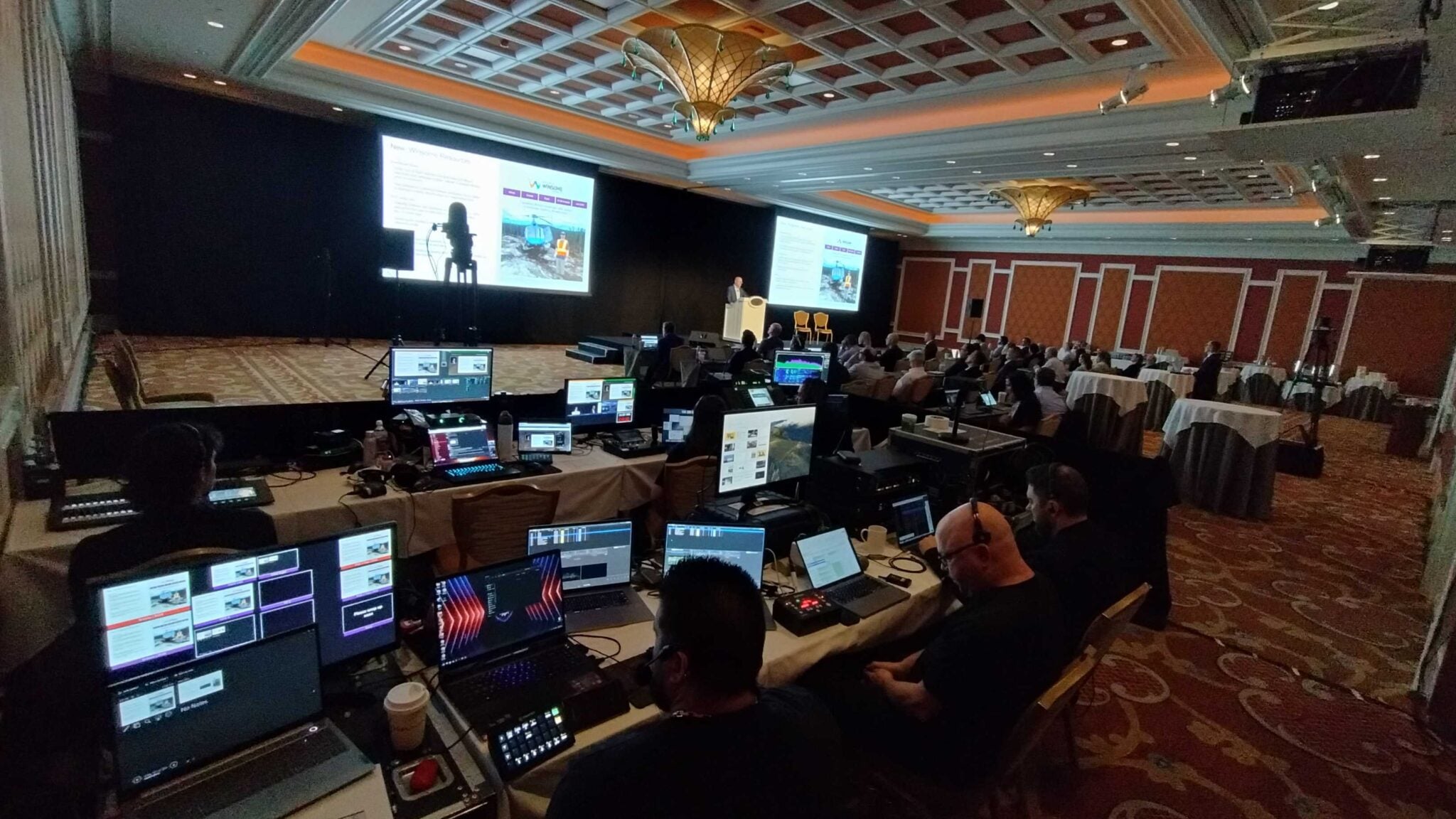
Our production team runs high-stakes sessions on Simulive, meaning pre-recorded content played to a live audience with our team in the chat, when the cost of a live failure outweighs the value of being live. Backup systems and crisis protocols sit behind every show.
Timmons Roberts, Professor and Executive Director of the Climate Social Science Network, put our record plainly: “They worked very fast, seemed to really know their business, and never dropped the ball once.”
No AI tool earns that sentence.
Which is why we tell organizers to separate the categories out loud. Ask which parts of your event an agency automates, and which parts a named producer owns.
Event element
Safe to automate
Needs a named human
Registration and reminder marketing
Yes
Campaign strategy
Speaker prep materials
Drafts only
Speaker coaching and rehearsal
Live show calling
No
Technical producer and show caller
Platform configuration
Partly
Rehearsal and failover testing
Attendee support during sessions
Chat assistant for basics
Live support team for escalation
Post-event content production
Yes, at scale
Editorial review before publishing
ROI reporting to leadership
Analytics and drafts
Strategy interpretation
The five places AI sits inside our event method
Our work runs on the SMART Event Method: Strategy, Marketing, Attendee Experience, Returns, and Transformation. AI has a specific job in each pillar, and no job outside them.
That last row is the one most agencies leave empty. Attendees forget most of what they hear within days, so an event ending at the closing session was mostly a cost.
Our Transform work keeps content and momentum alive for weeks, and AI makes personal follow-up possible for thousands of attendees at once.
How to evaluate an agency’s AI claims in six steps
Most AI language in this industry is marketing about marketing. This is the sequence our clients use to tell a capability from a slide.
Ask for a named event, not a named tool. “We used it on this conference for this client” is verifiable. A logo grid of software is not.
Ask what it produced. A clip library, translated sessions, a lead score, a forecast. If nothing shipped to a real audience, nothing was built.
Ask who checked the output. Generative work with no editor on top reads generic, and your audience notices first.
Ask where the event data goes. Event stack into CRM is the integration that makes measurement possible. Roughly two-thirds of organizations have it, and the ones that do report higher satisfaction.
Ask what stays manual. An agency automating nothing is slow. An agency automating the live show is guessing.
Ask what happens after. Content reuse, follow-up sequencing, and attribution are where the value moved.
Step four saves the most money. Attribution design is cheap before an event and expensive to rebuild after, since the data gets collected while people register, attend, and click.
What the event budget climate says about AI
AI arrived in event production for a plain commercial reason. Event programs got smaller, and the surviving events got more important.
Market signal
Figure
What it means for your next event
Flat or declining budgets
Roughly two-thirds of B2B event organizations, second year running (Forrester, 2026)
Efficiency claims have to be real, not aspirational
Fewer events
Close to 70% cutting the number of events while protecting quality inside the survivors
You are one of fewer, larger bets, with less room for error
Virtual rebounding
Organizations planning more virtual events roughly doubled year over year
Formats are recombining, and smaller interactive shows are winning
Proving impact
Over 90% prioritize audience acquisition, event data value, and proving impact
Production quality alone is assumed now, not scored
Agency commoditization
53% of agency owners call AI a serious threat, up from 44% (SparkToro survey)
Execution work is getting cheaper; strategy holds its price
Read the second and fourth rows together and the strategy is obvious. A shorter event calendar with a higher measurement bar rewards agencies that can say what an event was worth.
Read those signals together and the live event is no longer the product.
Buyers now score what the event becomes afterward, in clips, summaries, translated sessions, and sequenced follow-up. We have sold that work for years.
How AI use changes by event format
Virtual, hybrid, and in-person events are all current delivered capability for our team, and AI does a different job in each. The tools that help a global virtual conference are not the tools that help an on-site annual meeting.
Synchronizing two audiences, live engagement data, real-time captioning in both rooms
Our own three-camera rig, on-site crew, venue and AV integration
Association annual meetings, corporate summits with remote members
In-person meetings
Logistics modeling, vendor and budget operations, post-event content capture
Show calling, staging, and on-site logistics led by our production team
High-trust programs, awards, trade and experiential activations
Case in point: our hybrid rig has deployed on site across North America for FSBPT five years running, and our production inventory ships from our Florida warehouse. An agency renting everything has different incentives than one owning the gear and the crew.
A useful test. Ask which format an agency would talk you out of.
A partner willing to lose the larger line item to recommend the smaller correct event is worth keeping.
What different organizations need from an event partner
The buying question changes by organization type, and so does the shape of the engagement.
Strategy as the entry point, production as the core service
Annual conference, recurring across years
Corporate and internal teams
Employee engagement and clean execution across time zones
Integrated strategy, production, and reporting from one team
Internal summits, training programs, awards
Software companies
Registrations, pipeline, and attribution their marketing teams can defend
Event marketing plus production, measurement designed early
User conferences, product launches, webinar series
Training and education
Interactive sessions people finish and apply
Session design and Transform follow-through
Certification programs, multi-day workshops
Coaches, consultants, advocacy
Audience growth and conversion from a small team
Marketing-led programs with lean production
Virtual summits, campaign-driven series
Most organizers underestimate one line in that table: the people who own the data. Bring your marketing operations or database staff into the first strategy call, since the measurement design depends on systems they already run.
The honest pros and cons of AI in event production
Where AI earns its keep
Post-event content, where one live day becomes a library. Our ClickUp production reached 30,000 attendance and 2.1 million minutes of playtime, and content that keeps being watched keeps working.
Attribution and reporting, where analytics turn event data into a decision instead of a dashboard.
Follow-up at scale, the only way Retention Engineering reaches every attendee, not just the most engaged.
Marketing execution, where testing volume moves registrations. Our campaign work has delivered 7X registrations against the in-person equivalent, and a 6X return from advertising to sales over two years.
Access, where translation and transcription make a global audience possible without a global crew.
Where AI costs you
Creative sameness, when nobody senior edits the output.
False confidence, when a forecast runs on registration data nobody cleaned.
Tool sprawl, when each team buys its own and none of them talk.
Misplaced trust, when automation reaches parts of a show needing a person watching.
Wasted spend, when AI tools get bought before anyone agrees what the event should change.
But here’s the thing about that last one. Organizations invest heavily in event technology and then produce experiences satisfying neither their in-person nor their virtual attendees, because they treated better execution as a technology problem rather than a strategy problem.
On event platforms, since organizers ask
Rather than treating every event platform as equally good, we recommend and set up the small number we have streamlined processes around, which saves tens of hours of configuration on a typical conference.
Our agency licences also mean discounted or free software. Full-service packages bundle an Airmeet licence worth roughly $4,000 for a conference.
Neutrality makes you research. A streamlined process gets your event built.
On cost: production crew, studio time, and platform licensing drive most of an event budget, and AI moves none of them. What AI moves is scope, making content reuse, translation, and reporting cheap enough to include rather than cut.
The event work behind our claims
Client
What we produced
Result
CodePath
Award-winning virtual conference
6X increase in qualified sponsor leads, NPS around 80
ClickUp
Large-scale virtual production
30,000 attendance, 2.1 million minutes of playtime
IHRB
Global forum, on site and hybrid, Manhattan and London
1,700 attendees over four days
FSBPT
Three events a year, five years running, hybrid on our own camera rig
A recurring program compounding event intelligence each year
CSSN
High-stakes virtual sessions
“…never dropped the ball once.” Timmons Roberts, Climate Social Science Network
NP Digital
Event marketing program
Registrations grew from 9,000 to nearly 20,000
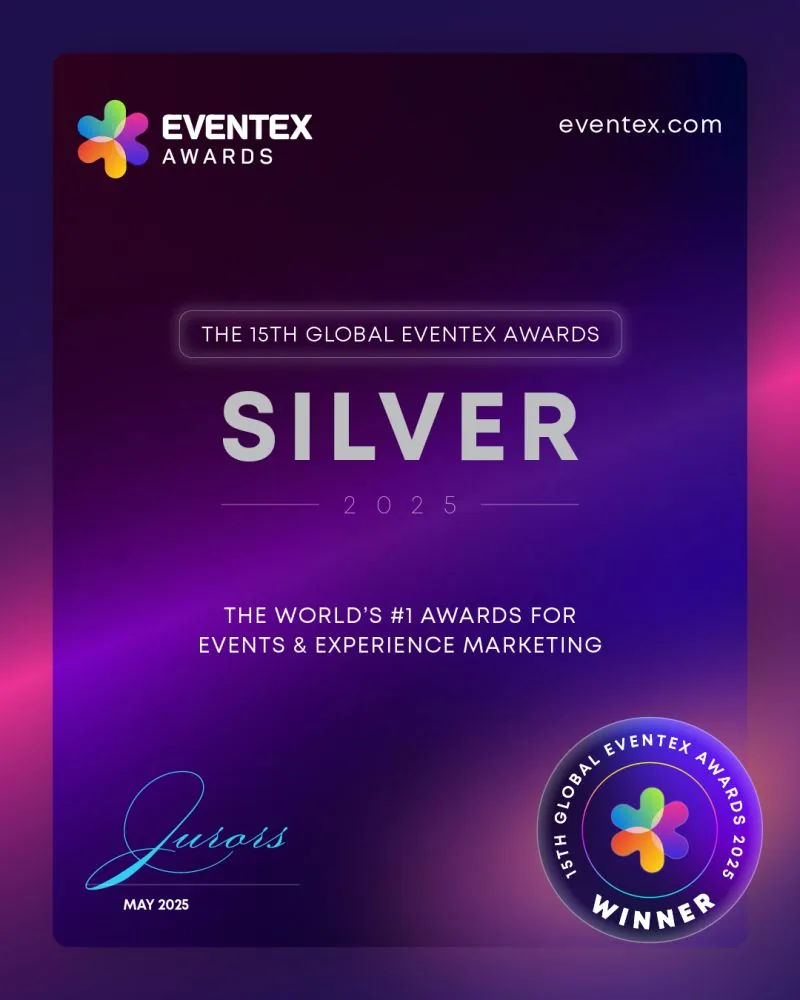
We hold Eventex Gold for People’s Choice Virtual Event of the Year, two years running, and Silver at the 15th Global Eventex Awards in 2025. ICCR has come back for six engagements.
Recurring clients compound the benefit, since each event teaches the next one something specific about their audience.
Work with us
If you’re looking for a deeper strategy around audience engagement, ROI attribution, and post-event follow-up systems that extend your impact long after the event ends, We & Goliath was built for exactly that. Our team works across every format, from virtual to hybrid to in-person.
The SMART Event Method combines data-driven strategy, broadcast-quality production, and integrated marketing to turn your events into measurable business results, whatever your goals.
We & Goliath is an award-winning, top 100 worldwide event agency known for increasing conference attendance by 7X and profits by 3X through beautifully designed virtual, hybrid, and in-person events. Since 1999, their team of innovative strategists and creative designers has worked with global enterprises, SMBs, non-profits, and other organizations to engage audiences and exceed expectations.