Every sight line and structural decision within stage design works as part of a larger story, creating spaces where meaningful connections naturally unfold.
Published: Updated:
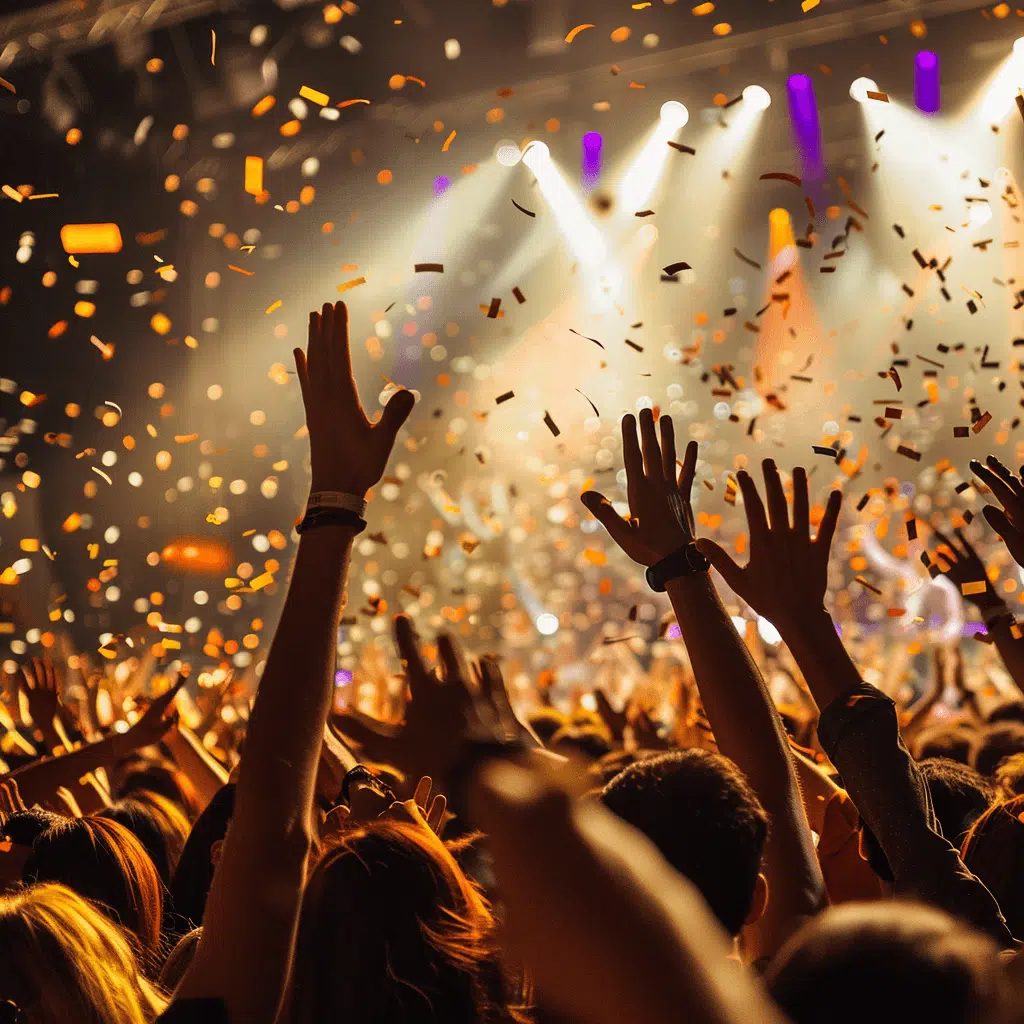
Magic happens at live events during those precious moments where attendees become completely immersed in what's happening on stage.
Exceptional stage design works its magic on multiple levels, creating spaces that make performers and audiences feel naturally connected.
Stage design blends creative expression with practical function, shaping how people interact, feel, and remember the experience.
Whether minimalist corporate setups or dramatic festival environments, great design actively shapes an event’s success rather than serving as mere backdrop.
Amplify Your Events
Turn your next event into an unforgettable experience – let’s weave some marketing wonder into your plans!
Stage design makes or breaks the atmosphere at any event.
Each element – from spatial planning to decorative touches – needs to contribute to one unified experience.
The goal?
Creating an environment that speaks directly to attendees while amplifying the event’s message.
Take corporate conferences – these often need clean, sophisticated designs that communicate professionalism.
Music festivals tend toward bold, energetic designs with dynamic visual elements that match the vibe.
Really getting to know the audience and venue lets designers create spaces that encourage natural interaction.
This deep understanding of who’s attending and what they need sets up the exploration of different stage options available to planners, with each type offering unique ways to connect with the crowd.
Types of Event Stages and Their Impact
Stage selection dramatically shapes how attendees experience and engage with event content.
Here are some common approaches and their ideal applications:
Traditional End-Stage
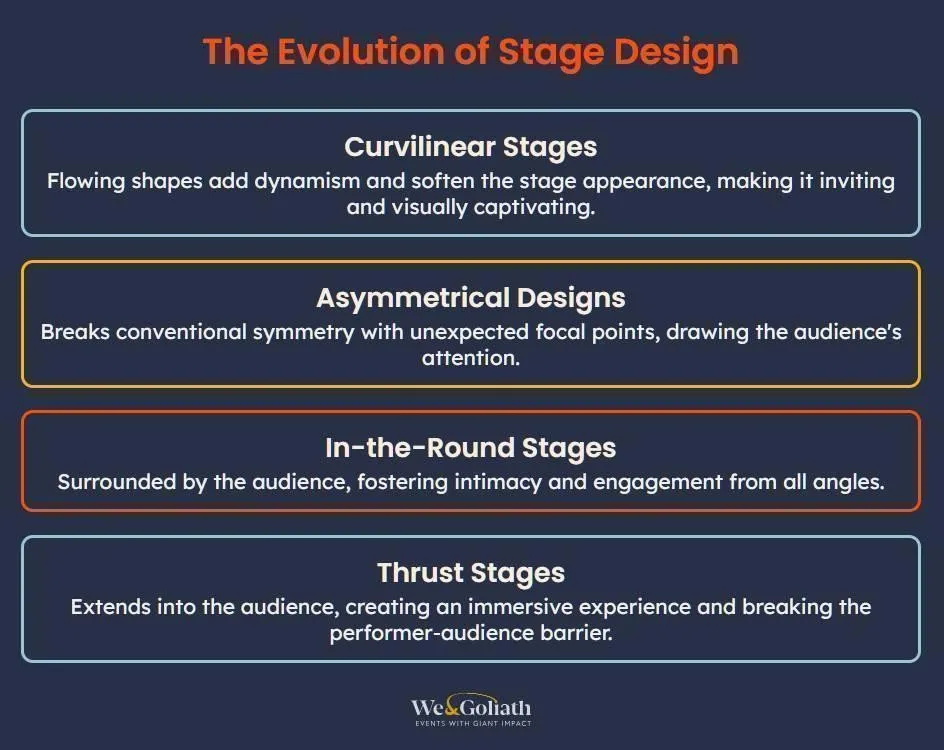
Thrust Stage
Modular Stage
Multi-Level Stage
Perfect for corporate conferences
Excellent for concerts and product reveals
Adapts well to smaller indoor spaces
Works well for large outdoor festivals
Promotes clear communication flow
Allows performers to get closer to audiences
Offers setup flexibility
Creates visual depth and interest
Creates focused attention on presenters
Creates more intimate atmosphere
Reconfigures easily based on room layout
Accommodates complex technical requirements
While these standard configurations provide a starting point, the real creativity comes from adapting and combining elements to perfectly match specific event goals.
Aligning Stage Design with Event Goals
Stage setups should reinforce event themes and objectives.
Here are some strategic configurations:
Rectangular Stages
In-the-Round Stages
Curvilinear Designs
Ideal for formal galas
Great for interactive workshops
Perfect for experiential events
Project elegance and sophistication
Foster dialogue and participation
Allow creative projection mapping
Provide clear sight lines and focal points
Remove traditional audience-presenter barriers
Add dynamic visual interest
Understanding these options reveals how technical and practical factors ultimately determine what’s possible for any given event.
Technical and Practical Considerations
Technical requirements often guide stage layout decisions.
Concert setups may need thrust or tiered stages to fit performers and gear, while fashion shows benefit from extended runways.
Modular components allow smooth transitions between different segments.
Smart designers balance creative vision with safety and logistics to enhance events without unnecessary complications.
This practical foundation supports what matters most – creating meaningful audience connections.
Enhancing Audience Engagement
Stage configuration directly impacts how audiences interact.
Thrust stages create intimacy by bringing speakers closer, while in-the-round setups immerse attendees by eliminating front-back separation.
Unique asymmetrical designs capture attention through unexpected viewpoints.
The stage should act as a bridge between the message and the audience, maximizing engagement and creating lasting impressions.
Success requires mastering fundamental design principles that apply across all stage types.
Essential Design Elements
Balance: Create stability through even visual weight distribution
Unity: Ensure elements work together while maintaining interest
Variety: Include contrasting features that hold attention
Harmony: Build cohesive aesthetics without visual clutter
Movement: Guide focus using dynamic elements and lighting
Emphasis: Direct attention to priority areas
These principles shine brightest through strategic lighting that transforms basic stages into extraordinary spaces.
The Role of Lighting
Light designer Ingo Maurer captured it perfectly: “Lighting is not just about illumination; it’s about how we feel in a space.” This insight guides several priorities:
Getting maximum impact from lighting budgets
Working closely with venues on proper fixture setup
Using advanced tech to elevate audience experience
As stage design continues evolving, innovative approaches keep expanding what’s possible for creative expression.
Creative Stage Shapes
Consider unique configurations that break traditional rectangular layouts:
Flowing curves that create natural movement
Unexpected asymmetrical designs that grab attention
Bringing these elements together demands careful attention to multiple success factors.
Creating Immersive Environments
Props and scenery work together to create immersive environments that transport guests into new worlds.
The three-dimensional quality of well-designed stages results in spaces that feel alive and engaging.
There’s a tangible difference when attendees see and experience thoughtfully created environments versus basic staging.
For example, a product launch might include an interactive display where guests can touch and buy new items, creating a complete customer journey within the event space.
Trade show booths which incorporate dimensional elements outperform flat displays, as they address the human desire to explore and interact.
When planning your stage design, ask: “Does this environment help tell our story?”
The elements you include must have purpose beyond decoration – they should support your message, reinforce your brand, and create memorable moments that guests will share long after the event concludes.
Visual Elements
Essential Considerations for Effective Stage Design
Several factors determine whether stage design succeeds in engaging audiences:
Consideration
Description
Audience Connection
Design should naturally facilitate interaction between attendees and presenters/performers
Space Utilization
Understanding venue dimensions helps optimize visibility and access
Theme Integration
Design elements need to reinforce event goals and create consistency
Resource Management
Maximize design impact while staying within budget constraints
Technical Integration
Plan for sound, lighting, and visual effects that enhance the experience
These considerations guide evaluation of different design approaches.
Advantages and Limitations of Stage Designs
Different stage designs offer distinct benefits and challenges:
Understanding design principles, considering essential factors, and learning from experience helps create engaging, memorable experiences.
Whether through innovative shapes, strategic lighting, or thoughtful layouts, great design elevates events and leaves lasting impressions.
Success comes from how elements work together, serving event goals while inspiring attendees.
As technology advances and expectations evolve, stage design continues adapting and innovating to create truly transformative experiences.
Making Your Vision Real
Stage design remains central to creating memorable event moments that move people.
Partnering with experienced teams who understand both creativity and technical execution helps bring design concepts to life in ways that captivate audiences.
The We & Goliath team provides comprehensive design solutions backed by years of successful events.
Contact us to explore how innovative stage design can create unforgettable experiences while maximizing your event investment.
We & Goliath is an award-winning, top 100 worldwide event agency known for increasing conference attendance by 7X and profits by 3X through beautifully designed virtual, hybrid, and in-person events. Since 1999, their team of innovative strategists and creative designers has worked with global enterprises, SMBs, non-profits, and other organizations to engage audiences and exceed expectations.