Engaging Your Audience: Techniques for Effective Audience Participation in Presentations
Standing at the crossroads of audience disengagement and presentation mastery, research reveals a startling truth: brilliant content alone fails without strategic human connection.
Published: Updated:
Presentations die in the gap between information delivery and audience experience – a preventable tragedy that unfolds daily across conference rooms worldwide.
Data shows nearly three-quarters of audience members mentally check out during typical presentations, with 28% texting, 27% checking emails, and 17% literally falling asleep.
Breaking this cycle requires more than compelling content; it demands a framework for transforming monologues into memorable dialogues that deliver measurable impact beyond the presentation itself.

Amplify Your Events
Turn your next event into an unforgettable experience – let’s weave some marketing wonder into your plans!
Let’s Talk!Building the Foundation for Engagement
Before diving into specific techniques, successful presentations require a solid foundation.
You can’t build engagement on quicksand.
Understanding your audience might seem obvious.
It’s not.
Too many presenters skip this critical step.
The painful mismatch between content and audience—technical deep-dives for executive audiences or high-level overviews for technical implementers—dooms presentations before they begin.
Taking time to analyze demographics, technical knowledge, job roles, and organizational context creates the necessary groundwork for engagement.
Segmenting the audience mentally provides strategic advantage.
Which members might be most receptive?
Who needs more convincing?
For executive presentations, high-level content with clear impact statements proves far more effective than technical details.
The “So what?” filter acts as a crucial litmus test that ensures everything connects directly to business value and audience priorities.
This mental check saves presenters from including content that leaves audiences wondering why they should care—the death knell for engagement.
Aligning content with objectives isn’t just good practice—it’s essential.
Every engagement strategy must connect to desired outcomes.
Building consensus?
Facilitating learning?
Driving action?
Effective participation begins with intentional planning rather than randomly scattered “interactive moments” that feel disconnected.
Creating a welcoming environment matters more than most realize.
The psychology of audience engagement reveals how small environmental factors significantly impact participation levels.
Room setup fundamentally shapes interaction: arranging seating to facilitate conversation rather than passive listening, having just enough seats to prevent those awkward empty front rows, creating access lanes for movement during interactive segments.
The cognitive principle of anticipation and uncertainty drives deeper engagement.
Audiences remain mentally present when they anticipate outcomes while remaining uncertain about results.
This creates a natural desire for resolution, transforming passive listeners into active problem-solvers.
The Engagement Progression Framework
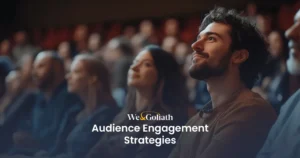
Figure 1: An engaged audience during a dynamic presentation.
Effective audience participation follows a strategic arc throughout your presentation:
1. Capture Attention (Opening Minutes)
The first two minutes are crucial for establishing an interactive tone.
Consider these approaches:
Data-driven hooks that challenge assumptions create immediate cognitive engagement.
When conventional wisdom collides with surprising data, minds snap to attention.
Scenario immersion presents realistic professional challenges the audience faces daily.
This approach brings immediate recognition as situations mirror their experiences, making content instantly relevant.
Collaborative goal-setting involves attendees in defining what success looks like for the session.
This creates immediate buy-in and shapes expectations.
The golden rule for engagement? Interact within the first two minutes.
This crucial window establishes rapport immediately.
The difference between engaging in the first two minutes versus the first five produces significantly different outcomes.
Open with impact
Several approaches yield consistently strong results.
Beginning with the conclusion—what military contexts call “bottom line up front”—immediately orients the audience, providing the frame before filling in the picture.
The journalist’s inverted pyramid approach works equally well—leading with the most important information, then adding supporting details.
Icebreakers
Effective icebreakers create a pathway to participation while maintaining psychological safety.
Moving beyond generic questions like “How’s everyone doing today?” toward more specific, low-pressure interactions yields better results.
Unexpected but easy questions like “What’s your favorite cheese?” or simple “this or that” questions (Morning person or night owl? Beach or mountains?) make participation easy and low-risk.
Simple physical actions change the energy in a room instantly.
Even basic synchronized movements create immediate group cohesion, shifting people from passive observers to active participants.
Physical engagement activates the audience on multiple levels simultaneously.
2. Maintain Connection (Core Content)
Research on attention spans has transformed effective presentation structure.
Breaking content into 10-minute blocks, each using different engagement strategies, combats what seasoned presenters call the “sameness that begets boredom.”
Human brains naturally notice changes in environment while filtering out constants—presentation formats follow this same principle.
Strategic storytelling forms the backbone of memorable technical presentations.
Data dumps fail where case studies succeed.
Stories create emotional connections that facts alone simply cannot achieve.
Personalizing technical elements makes complex concepts instantly more relatable.
Rather than stating “The system performs calculations,” saying “The computer thinks through multiple scenarios to find the optimal solution” invites mental participation in a way that technical descriptions often don’t.
Visualization techniques transform complex data into accessible insights.
The collective “aha” moment when abstract statistics become concrete reality represents one of the most powerful tools in the presenter’s arsenal.
Making numbers meaningful through graphics, rounding off complex figures, and translating them into human terms connects technical content to everyday experience.
Deliberate interaction points strategically placed maintain focus throughout presentations.
Scheduling engagement activities at roughly 10-minute intervals creates a rhythm that sustains attention:
- Asking an interactive question
- Showing a relevant video clip
- Sharing a unique anecdote
- Presenting a problem for collective analysis
- Temporarily turning off visual aids to refocus attention
NOTE: Distributing interactive elements throughout the presentation rather than grouping them at the beginning or end maintains engagement across the entire session.
Acknowledging the collective expertise in the room transforms the audience from passive receptacles to active contributors.
Simple statements like “The expertise in this room is extensive. Your insights on…” create two-way communication channels and validate audience members’ presence and knowledge.
Questions stand as a remarkably versatile tool for audience engagement.
Preparing 10-20 open-ended questions before important presentations provides options for steering discussions and maintaining control when needed.
Reflective questions that prompt audience members to connect content to their own experiences work especially well.
Beginning presentations with a raise-of-hands question immediately activates participation.
Allowing silence after asking questions—not rushing to fill the void—gives people time to process and respond thoughtfully.
Adult learning thrives on discovery, not mere information transfer.
The magic happens when conditions allow audiences to reach their own understanding, connecting new content with existing knowledge frameworks and experiences.
Voice and body language profoundly affect engagement levels.
Speaking slowly with deliberate pacing projects confidence.
Using downward inflection at the end of sentences establishes authority.
Varying tone and volume prevents the monotone delivery that acts as the quicksand of audience attention.
Replacing filler words like “umm” with bridging words like “now” and “next” creates smoother transitions while providing thinking time.
Mirroring the engagement you seek sets the energy barometer for the entire room—enthusiasm acts as a contagious catalyst.
Visual support should complement participation, not compete with it.
Minimal text maintains eye contact with the presenter rather than slides.
Visuals that spark discussion rather than merely convey information generate deeper engagement.
The power of threes creates an effective rhythm—3 slides per concept, 3 key points per section, 3 sentences per explanation—keeping audiences comfortably engaged without overwhelming them.
Building rapport begins before stepping on stage.
Connecting with audience members beforehand, gathering feedback, and adapting material based on input shapes more relevant presentations.
Consistent eye contact throughout creates individual connections within the larger group setting.
Incorporating decision points allows the audience to influence direction.
“Choose your own adventure” formats where the audience decides between options generate surprising levels of investment.
This requires preparing flexible content that adapts to audience preferences, but the increased engagement justifies the additional preparation.
3. Drive Application (Closing Segment)
The closing segment connects presentation with implementation.
All engagement efforts culminate here in driving actual application through three essential elements:
- Action planning guides participants in applying concepts to their specific organizational context. Concrete planning consistently outperforms abstract discussion when it comes to implementation.
- Commitment mechanisms establish accountability structures for post-event implementation. Public commitments to specific actions dramatically increase follow-through rates.
- Resource distribution provides implementation tools tailored to different organizational structures. Preparing these in advance based on audience analysis ensures relevance and utility.

Join the Virtual Event Revolution!
Let our crew of creative tech wizards cast an online engagement spell to mesmerize your audiences into a virtual frenzy!
Let’s Talk!Structured Group Activities for Deeper Engagement
A well-developed toolkit of activities creates opportunities for meaningful participation that transforms audiences from observers to active participants.
Speed networking arranges quick rotations where participants interact in succession.
Allowing at least five minutes per interaction enables meaningful conversation.
This approach leverages collective expertise while creating unexpected connections between participants.
Lightning talks invite 5-10 audience members to give 5-minute presentations on topics they find interesting.
Sending invitations in advance allows preparation time, while keeping impromptu slots available enables spontaneous contributions.
These brief presentations provide variety and create platforms for knowledge sharing.
Roundtables form small groups of 5-10 people to discuss specific topics.
This format encourages contribution from those hesitant to speak to larger audiences.
Designating someone to capture insights ensures the collective wisdom isn’t lost.
Role-playing creates scenarios where participants assume specific roles to practice skills in simulated conditions.
This technique works particularly well for practicing listening skills and quick decision-making.
The initial awkwardness quickly gives way to authentic engagement as participants immerse themselves in scenarios.
The challenge paper throw represents a particularly effective physical engagement technique—participants write down problems they’re experiencing, then physically toss the papers.
Others pick up nearby papers, read problems aloud, and suggest solutions.
This activity leverages collective problem-solving skills while adding physical movement and randomness that energizes the room.
Getting audiences physically active resets attention spans.
Dividing crowds and assigning different participation roles, having audience members physically move to different sides of the room based on preferences or votes, using hand raising or standing for quick polls, and creating “walk and talk” pairs for brief discussion periods between segments all activate multiple engagement channels simultaneously.
Tangible interactions engage multiple senses.
Providing sticky notes for audience members to write responses and post on walls, using whiteboard activities for collaborative problem-solving, incorporating drawing exercises with specific instructions, and distributing physical tokens that participants can use to “vote” by placing them in designated areas create multi-sensory engagement pathways.
Technology Integration for Seamless Engagement
Technology amplifies engagement when used strategically.
Not as a crutch. As an amplifier that extends interaction possibilities.
For live polling in enterprise settings, Slido Enterprise offers SOC2 compliance with a 1-2 week implementation time.
Interactive Q&A through Mentimeter Pro provides GDPR compliance with just 3-5 days of setup.
Zoom Webinar handles breakout management with end-to-end encryption available immediately, while collaborative dashboards offer content sharing with role-based access taking about a week to implement.
Platforms like Poll Everywhere and Mentimeter enable multiple-choice polls with real-time results, instant feedback gathering, comprehension quizzes, and audience opinion visualization through interactive charts.
Displaying live polling results creates a powerful moment as participants see their input materialize on screen.
Alternatively, building suspense by hiding responses for a dramatic reveal punctuates key points with collective insight.
Digital tools have multiplied engagement options.
Microsoft Forms enables question/poll creation with QR codes for audience scanning.
Mentimeter, Slido, and Poll Everywhere offer interactive polling without requiring app downloads.
Integrating polls that visualize responses in real-time through word clouds or live graphs proves particularly effective.
Technology acts as an amplifier, not the main event—enhancing messages rather than becoming them.
Distributing interactive technology moments throughout presentations, not only at the beginning or end, maintains engagement.
A timing pattern of 5 minutes of content, 2 minutes of video, 3 minutes of interactive polling establishes a rhythm that sustains attention.
A low-tech backup plan addresses the inevitable technology issues that arise.
Murphy’s Law seems especially attracted to presentation technology.
Paper-based alternatives, downloadable offline content, or well-rehearsed narrative paths that don’t depend on slides prevent technical problems from derailing sessions.
From Information Delivery to Transformational Experiences
Exceptional presentations aren’t measured by slides shown or information conveyed, but by actions taken and results achieved after participants leave the room.
With these systematic engagement strategies, presentations deliver lasting impact that extends far beyond the session itself.
Purposeful engagement enhances understanding and retention, going beyond interaction for its own sake.
These strategies create presentations that audiences don’t simply attend but actively experience—making messages more impactful and memorable.
From Forgotten Presentations To Unforgettable Experiences
From information delivery to transformational experiences—the journey doesn’t end here.
While these strategies provide a roadmap, implementation brings its own challenges.
We & Goliath’s award-winning team transforms event organizers into heroes with production, platform, and promotion expertise that drives measurable results.
Our clients consistently achieve 4-5X attendance and 6X ROI through our proven engagement techniques.
Why struggle with multiple vendors when one partner can save you 100+ hours?
Experience the difference that 20+ years of engagement expertise brings.
Schedule your free strategy session today and discover how to make your next event unforgettable.