Event Sponsorship Agreement: Sponsor Terms and Rights
Long-term commercial success in the events industry hinges on sophisticated sponsorship frameworks that prioritize both data and relationships.
Published: Updated:
An event sponsorship agreement is a contract that sets out what a sponsor pays or provides, the benefits it gets in return, and the payment, rights, liability and exit terms both parties follow.
Securing corporate sponsorship for your conference or event is essential for its commercial success and long-term sustainability.
This guide outlines how to secure corporate partners, build partnerships that benefit both sides, and put the deal into a sound written agreement.
Understanding your conference’s value proposition
Before contacting potential corporate partners, define what sets your event apart. Consider these key aspects:
Clear business objectives: outline what you hope to achieve, whether that’s corporate visibility, leads for products and services, or engagement with your community.
Audience analysis: understand your attendees’ commercial interests and behaviors, so you can show each partner who it will reach.
Event type and reach: decide whether your conference will be in-person, virtual or hybrid, and estimate attendance and engagement.
With a clear understanding of your event’s value, you can start building relationships with potential partners.
This groundwork pays off as you move forward. It helps you target the right partners and tell a story that matches what they want to achieve commercially.
Developing strong corporate partnerships
Lasting connections with corporate partners decide how well your current conference performs and whether the same companies come back next year.
As experienced promoters know, building these partnerships takes a plan that combines professional networking with personalized outreach:
Industry networking: attend corporate events and conferences to meet potential partners. Make a point of being seen at the industry gatherings where corporate decision-makers spend their time.
Personalized business outreach: align your conference objectives with each partner’s company values and commercial goals. Learn its products and services before making contact.
Continuous corporate engagement: stay in contact after the event date. Regular check-ins keep the relationship warm. Afterward, send each partner a report on what its support delivered and ask for structured feedback before you talk about renewal.
The feedback you gather will help you refine your proposals and the packages you offer.
Whether you're working with a major corporation or a local business, each sponsor needs to feel that it is getting unique value from the partnership.
Crafting a compelling corporate sponsorship proposal
A sponsorship proposal is the formal bridge between relationship building and signing a corporate sponsorship agreement. Successful proposals include these components:
Data-driven business insights: metrics that show potential return on investment (ROI), such as audience demographics and the leads a sponsor can expect.
Corporate value proposition: the benefits sponsors will receive, including brand visibility and engagement opportunities for their products.
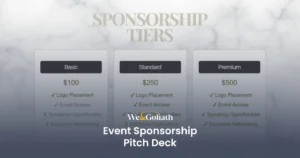
Flexible commercial packages: several price levels to fit different corporate budgets and marketing objectives. A sponsorship pitch deck helps you present them.
Corporate decision-makers often review dozens of sponsorship requests each month, so make yours clear and specific. Once a company says yes, the terms in your proposal become the starting point of the contract, so consider having a lawyer review it before you send it.
Understanding the legal framework for conference sponsorship agreements
A legally sound sponsorship contract gives both the host organization and the partner clarity and protects each party’s interests under the law. Whether you’re organizing a nonprofit conference or a commercial event, it should address every likely condition.
Here are the elements to include, with a lawyer’s review before anyone signs.
Purpose and core elements of business sponsorship
Every corporate sponsorship agreement begins with a clear statement of purpose that names the parties, the event and its dates. It should also fit the format, whether virtual, hybrid or in-person, and address:
Delivery mechanisms for sponsor products and services
Engagement metrics that sponsors will receive
Success benchmarks that can be used to measure ROI
Scope limitations that protect both sides
Corporate benefits and deliverables
Beyond publicity and promotional opportunities, the contract should outline:
Digital asset specifications, including file types and submission dates
Contingency benefits that activate under specific conditions
Measurable metrics with defined reporting schedules
Brand visibility guarantees for corporate products and services
A named contact on each side who checks that every benefit is delivered
Financial framework
Financial obligations go beyond the sponsorship fee and its payment schedule. Include:
Currency exchange provisions for international corporate sponsors
Refund policies based on deliverable fulfillment conditions
Tax implications for both commercial and nonprofit entities
Expense-sharing arrangements for additional costs that arise
Term, termination and renewal
Termination clauses protect both the host and the sponsor beyond the conference date. Key elements include:
Post-termination transition periods with clear protocols
Explicit definitions of what conditions constitute contract breaches
Cure periods for different types of violations, with timelines for remedies
A renewal window that opens before the sponsor’s budget cycle closes
Multi-year options with a yearly review of benefits and fees
Exclusivity, confidentiality and governing law
Category exclusivity: whether competing brands may sponsor the same event
Confidentiality of fees, attendee data and business information
Which law governs the contract and how disputes will be resolved
Signatures from people authorized to bind each party
With these terms in place, you can make the most of your sponsorship opportunities while managing risk and keeping room to adapt.
The goal is a set of sponsor partnerships that grow stronger with each successful collaboration.
Intellectual property and corporate brand usage
Online and hybrid event platforms have made intellectual property rights more complex in commercial sponsorship agreements. The contract should set out how each company’s assets can be used across platforms and publicity channels.
Essential IP elements for corporate events
Social media usage rights for corporate products and services
Clear conditions for influencer collaborations featuring sponsor brands
Post-conference content rights that specify how long sponsors can use event-related publicity
Policies about user-generated content that features sponsored elements
Guidelines for how the sponsor’s company name and logo can be used in promotional materials
Terms for how nonprofit organizations can use corporate sponsor branding
Digital rights management
Digital rights need their own terms in sponsorship contracts. Include:
Terms for livestream and recorded content usage
Conditions under which sponsors can access event recordings
Guidelines for using sponsor products in virtual conference environments
Digital asset ownership and usage rights
Terms for social media publicity and hashtag ownership
Protocols for managing sponsor visibility on online platforms
Risk management and corporate liability structure
Risk terms protect every party, at a nonprofit conference or a commercial event. Cover both traditional risks and newer ones, such as data breaches.
Essential risk management components
Cyber liability responsibilities and response protocols
Data breach procedures that sponsors must follow to protect attendee information
Insurance coverage requirements for different types of commercial risk
Event cancellation conditions and their impact on the contract
Force majeure clauses that define which circumstances allow the contract to change
Terms for how product demonstrations can be used during the event
Insurance requirements
The contract should specify:
Types of insurance coverage each party must maintain
Minimum coverage amounts for different forms of liability
Requirements for cyber insurance in digital events
Event cancellation coverage conditions
Terms for adding sponsors as additional insureds
Time periods during which coverage must be maintained
Final thoughts on corporate sponsorship success
Securing corporate sponsorship for your conference involves more than obtaining funding. It means building partnerships that can turn a one-time gathering into a sustainable commercial platform.
Knowing your conference’s value, building strong relationships with corporate partners and writing clear proposals lead to partnerships that work for both sides.
Each step, from first contact through a signed agreement to post-event reporting, builds your reputation as a reliable and professional event host.
Frequently asked questions
What is an event sponsorship agreement?
It is a contract between an event host and a company that sets out what the company pays or provides, the benefits it receives, and the terms both parties must follow.
What should a sponsorship agreement include?
The parties and purpose, benefits and deliverables, fees and payment terms, term and termination, intellectual property rights, exclusivity, confidentiality, liability, insurance and governing law.
What is the difference between a sponsorship proposal and a sponsorship agreement?
The proposal pitches the packages and benefits to win a partner. The agreement is the signed contract that makes the chosen package binding.
Do you need a lawyer for a sponsorship agreement?
Have a lawyer review the agreement before anyone signs, especially for large fees, international sponsors or data-sharing terms.
Building your next generation of corporate partnerships
If you want help with your sponsorship strategy, We & Goliath works across every format, from virtual to hybrid to in-person. Our SMART Event Blueprint is a 2-3 week strategy engagement that includes sponsorship and marketing strategy, with a roadmap your team can run, or we can help carry it.
For CodePath’s 2024 Emerging Engineers Summit, which we produced, qualified sponsor leads grew from 5,131 to 30,461, a 6X increase across 50 sponsors. So book a strategy session to talk through your next program.
We & Goliath is an award-winning, top 100 worldwide event agency known for increasing conference attendance by 7X and profits by 3X through beautifully designed virtual, hybrid, and in-person events. Since 1999, their team of innovative strategists and creative designers has worked with global enterprises, SMBs, non-profits, and other organizations to engage audiences and exceed expectations.